Leaders know that good data is essential to good decisions. But what data? Finding the right data, at the right time, from the right sources is critical. Data is the first of four elements from a simple acronym DPPE that stands for Data, Purpose, Plan, Evaluate.
DPPE is an easy way to describe and categorize project phases as well as many small to complex leadership tasks. These may include:
Updating strategy and programs
Making a policy or process change
Implementing new initiatives,
Educating leaders for 21st century and/or emerging new needs
Building a house the suits the neighborhood as well as the buyers (photo above)
Leadership skill is built upon skilled listening, including listening to yourself for health and wellness. Busy leaders know intellectually that taking care of yourself is how you are best able to take care of others. The challenge, in this part three of our series, continues to be putting this principle into disciplined, regular practice. Leadership coaching, as my clients have told me, has helped leaders:Continue reading “Seven Ways New NonProfit Leaders Succeed the First Year on the Job”
Like a well-played symphony, when nonprofit leaders partner well with their board, staff and volunteers, magic happens. Though a board of directors or council holds ultimate legal and fiduciary responsibility, true success requires a solid partnership between the chief executive officer (or staff officer) (CEO / CSO) and chief elected officer, a board chair or council president.
It takes courage to listen. Whether it’s a first or fifth transition to a new leader role, these non-profit leadership lessons learned are timeless. Pause, reflect, choose (from horse-guided leadership & learning.) In your first months, resist the urgent and not important tasks and follow these practical steps to ensure your success.
Successful organizations focus on people as well as profits, often built with talented staff that take action as co-owners of the business. Twenty-first century talent retention practices can build greater success in your organization. Here’s are 4 ways leaders can help this happen:
1) Check your “hire smart” bench strength & compensation Nothing breeds success like talented staff and the ability to pay them at the going market rate or better. Nothing works right if you don’t have these two basics as your foundation. Make sure your hiring process is top-notch using behavioral and performance based questions and follow-through. Don’t hesitate to make a change if staffing mistakes have been holding your business back from success.
What can a 1200 pound horse teach you about leadership? In 2010, I found out as Cherokee walked up and chose me in an experience that has forever changed the way I relate to both people and animals in my professional and personal work as a coach and consultant. The photos below reflect my early experiences working with horses as a learner and a future coaching partner.
What I learned, from Horseplay and mindfulness practices included:
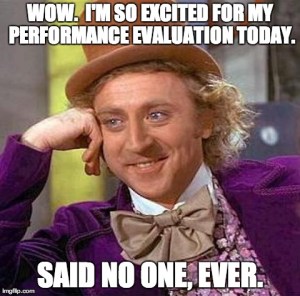
Let it go, let it go, let it go! Let go of performance appraisal practices and industrial age thinking. In our post 9-11, now Covid-era, no-such-thing as “New Normal” world, business models continue to evolve dramatically and surprise us. Yes, the old relic of performance appraisal from twentieth century business practices persists. For example, a recent entry1 in Wikipedia suggests:
“…electric power generation is still based mostly on fossil fuels and much of the Third World economy is still based on manufacturing. Thus it is debatable whether we have left the Industrial Age already or are still in it and in the process of reaching the Information Age.”
– Anonymous
The brief video below is the second in a two part series about letting go of performance appraisals.
“If you do not know how to ask the right question, you discover nothing.”
W. Edwards Deming, a fierce critic of performance appraisals
The video includes the William Berger2 concept of asking a beautiful question, similar to the words of organization systems pioneer, W.Edwards Deming, “If you do not know how to ask the right question, you discover nothing.”
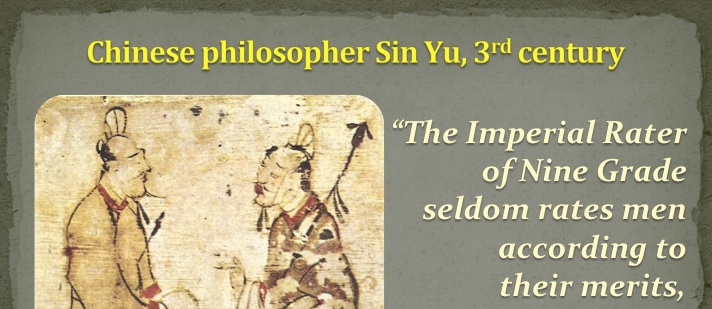
We covered the origins of performance review from 3rd century Chinese philosopher Sin Yu through Robert Owen, who set up a system for daily worker feedback. We included the “father of scientific management,” Frederick Taylor’s and his ONE BEST WAY of performing work , tailored to the manufacturing age. We also featured W. Edwards Deming and the Quality movement, which spawned systemic changes in business in the 1990s. We have a ways to go to make the systemic concepts of Deming a reality in the 21st century.
Newer concepts and systems to spur on change: An article in Fast Magazine entitled “How to Give Good Feedback” by Gina Imperato described several efforts by companies to abolish performance reviews and replace them with something else.
One story in the article, about Parkview Medical Center, is a helpful example of how to change thinking about this long time practice. It describes how they discovered there wasn’t any way to improve doing individual performance appraisals, so they stopped doing them, replacing them instead with the APOP, a system focused on developmental conversations.
There are no scores, no written goals for the next year. It’s literally a piece of paper…
Parkview Medical Center discarding performance appraisal rating systems
The shift away from performance reviews, described in the article, was a big change in thinking and beliefs. Instead of evaluating past work, the annual meeting became a development-oriented conversation, based on requests for development or assistance based on asking good questions:
What can I / we do to make your job easier?
What gets in the way of accomplishing the job?
Goal setting tied to evaluations: We are used to setting goals and meeting targets. Whether those are team or individual goals, we are still mostly tied to an individualized performance mindset that is too emotional, subjective, and rigid for the global, customer-centric, lightning fast changing world we live in.
Using an approach like the APOP or a two box annual conversation method, Meets [or Exceeds], Does not Meet, as mentioned in the video, is a step in the right direction. It is a form of incremental change, very similar to the Adobe Systems “check-ins” process. Adobe’s 2012 system moved away from individualized ranking and ratings. Their change is similar to the flip in thinking that created the APOP, the Annual Piece of Paper approach.
A transformative leap would be taking an even larger leap away from such meetings entirely. It doesn’t have to be hard. Philosopher professor Peter Koestenbaum asks, “How can we muster the guts to burn our bridges and to create a condition of no return?” The context for his question is in the sometimes, or even often times cruel, dehumanizing aspects of business pressures existing in a polarity of building a creative, humane workplaces. Koestenbaum says:
Rating scale by billso Flickr
“There’s a terrible defect at the core of how we think about people and organizations today. There is little or no tolerance for the kinds of character-building conversations that pave the way for meaningful change.”
Do You Have the Will to Lead? Interviewed by Polly Labarre, Fast Company magazine
This is where we can see that adding a higher value to conversation itself builds a depth of understanding in how human relationship building is important in performance excellence. The two box evaluation is a way to step away from inspection-oriented evaluations and step towards valuing conversation
A Critique. The Death of Pass/Fail Minimal Appraisal: An article in the Journal of Organization Development (2008) authored by Stanley Ridley, predicted the death of two box performance appraisal, also labeled the Pass/Fail approach. The article argues the point that a Pass/Fail system, which can only identify the 1% or less who fail, can be hardly fair or valid, when aligning performance with organizational goals.
Obsessing about opinions
Fairness is not the goal of using a pass/fail system. It’s about making an incremental change away from appraisals entirely. (You can also just stop doing appraisals, and focus on development feedback instead.) Fairness is a relative concept for any type of rating system based on the perception of the fairness of the rater. Pass/Fail and narrative, performance appraisal methods are a steps toward conversational documentation tools. They are steps on the path to letting go of individualized performance appraisal beliefs entirely in order to shift to new methods of capturing worker contribution and accomplishments.
Validity: The Ridley article lists low validity for Pass/Fail performance appraisal vs. multi-level ratings in a table, as there is no differentiation in performance related to organization goals. Well, exactly! It’s important to look for other ways of capturing data on worker performance and alignment vs. continuing with 20th century pseudo-valid rating scales based on one supervisor’s view of an individual’s performance.
Objectivity: You won’t ever remove subjectivity from manager-employee performance discussions, no matter how much manager training you do. The individual evaluation focus will always be based upon that manager’s perspective of the business and her relationship with her workers. It will always have an element of “inspection” based on top-down management beliefs, based on scientific management thought leadership attributed to Frederick Taylor and Henry Ford. That was a very long time ago.
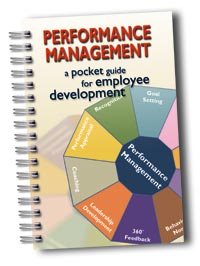
Who really gets Deming? Seriously? I was amused to find a passage in, “Performance Management: A pocket guide for employee development” by James Rollo, 2001 that cites “The Deming Perspective.” It mentions the approximately 1% figure that Stanley Ridley cites as an issue of “fairness.” The book states:
Are W. Edwards Deming’s principles evident in this book?
“Deming also suggested that 99.7% of employees operate within the system. That means on average only .15% are above the system (and need special reward or advancement) and .15% are below the system (and need special coaching or job change.) It is important to recognize the effect of company systems on employee performance.”
(p. 113)
No, we cannot make performance appraisals objective. Ever.
Moreover, this little 2001 era guide (the concepts of which are STILL in practice today in 2022) then continues merrily along on the very next pages, pp. 114-118 illustrating how to develop “A Performance Appraisal Format” complete with a 4 point individual rating scale and a 3 point group performance appraisal. It would seem Deming’s points were stuck in book to acknowledge his systemic view, then duly ignored.
The Way Forward: The workers within your business are the ones who have and can continuously improve it. They are the best resources to help you adapt to VUCA, the volatile, uncertain, complex and ambiguous 21st century business environment. 21st century thinking is:
Letting go of the illusion of control symbolized in rigid appraisal practices,
Embracing the reality of networks, in person and virtual, and
Reconsidering hierarchy as just one of several options for how organizations today are designed
In complex environments, weak hierarchies andstrong networks are the best organizing principle.
…It means giving up control.
Harold Jarche, moving from hierarchies to teams and “Wierarchies,
Do we really have the control we think we have? Establishing agreement of what the work is, talking about the work regularly including two-way feedback, and asking good questions are better options than maintaining bureaucratic performance appraisals. Three book/white paper references at the end of this post provide more ideas and specifics on alternatives.
What about teams? A few months ago in a program I offered to HR professionals the question came up, “How do you do team appraisals? Well, replacing one tedious, outdated practice with the same thing applied to teams is like replacing a Model T with a Greyhound bus to race the Daytona 500. Instead, consider pit crews, working toward an understood goal of amazingly fast changeovers. It’s the clear understanding among team members, agility and good results using a few, smart metrics that matters
Finally, as listed in the video, here are six questions to test your readiness to make this change happen:
If you take this path, let me know how it is working. Email me at DebNystrom@Reveln.com or chat with me via my contact information.
References and Resources:
The Industrial Age defined by Wikipedia, “…changes in economic and social organization that began around 1760 in Great Britain and later in other countries, characterized chiefly by the replacement of hand tools with power-driven machines… much of the Third World economy is still based on manufacturing. It is thus debatable whether civilisation has left the Industrial Age already or is still in it.“
Warren Berger, A Beautiful Question: The Power of Inquiry to Spark Breakthrough Ideas, (2014)
Jeremy Hope and Steve Player, Beyond Performance Management: Why, When, and How to Use 40 Tools and Best Practices for Superior Business Performance, (2012) This book examines 40 current performance tools and practices and provides antidotes to command and control thinking.
Jeffrey Pfeffer and Robert Sutton, The Knowing, Doing Gap: How Smart Companies Turn Knowledge Into Action, (2000)
Niels Pflaeging, the BetaCodex white papers including: “Making Performance Management Work” (2009) by Niels Pflaeging. The Pflaeging and associates papers are especially helpful for seeing the reasons why imposing spreadsheets and the like on performance processes doesn’t work based on flawed beliefs.
VUCA is a term developed by the military. It is useful for defining the volatile, uncertain, complex and ambiguous nature of our 21st century world.
Here’s a curated collection on new ways to structure work, learning, leadership and management pertinent to this article:
So many things can change quickly in the 21st century work world that it helps us to polish our natural abilities toward adaptive change. How can you FRAME an approach to entrepreneurial change that helps you adapt to a business climate that is always changing?
Entrenched habits tend to persist, mostly invisible, until poets, reformers and provocateurs start writing, talking and asking questions. They challenge us to reexamine long-standing practices that no longer fit our current world and what’s on the horizon.











 Reveln Consulting